Older Bronxville homes can be deeply appealing, but they also ask more of you. A beautiful Tudor, Colonial, or Victorian may come with original plaster, aging systems, prior renovations, or permit questions that are easy to underestimate. If you are planning updates in Bronxville, a smart approach can help you protect character, avoid costly missteps, and focus your budget where it matters most. Let’s dive in.
Why older Bronxville homes need a different plan
Bronxville has a housing stock that is unusually rich in character for such a compact village. The Village of Bronxville describes a one-square-mile community with single-family homes, co-ops, condos, and apartments, with roughly 60% of households in single-family homes and 40% in co-ops, condos, and apartments. That mix matters because renovation planning often looks very different depending on whether you own a detached house, a co-op, or a condo.
Many of the village’s homes also reflect distinct architectural eras and styles. The Lawrence Park Historic District, for example, is recognized for Colonial Revival, Classical Revival, and Tudor Revival architecture, with significance extending through 1949. In practical terms, that means many homes in Bronxville are not just older, but have details that shape how buyers experience value.
Start with scope before design
Before you choose tile, paint colors, or fixtures, define the true scope of work. In an older home, visible finishes are only part of the story, and the bigger cost drivers may be hidden behind walls, under roofs, or in prior work that was never fully documented.
A practical first step is to document the home as it exists today. Pull prior permits, building files, and any older plans you can find before finalizing a renovation plan. If you want historical context, the Bronxville History Center maintains historic documents, maps, photographs, and some of the village’s oldest records that can be accessed by appointment.
Understand Bronxville approval triggers
Bronxville’s local rules are important to review early. For detached one-family homes, site plan approval is required for new construction and for material alterations, while interior-only alterations that do not change use do not require site plan approval. That distinction can affect your timeline, design choices, and carrying costs.
One detail that often surprises homeowners is that the code aggregates multiple building permit applications over a 36-month period when evaluating whether a project crosses the material alteration threshold. So if you are thinking about doing work in phases, it is worth understanding how separate projects may be viewed together.
For larger exterior projects, Bronxville’s code allows a preapplication meeting with the Planning Board and Design Review Committee for developments estimated to exceed $50,000. If your plans are moving toward major exterior work or substantial changes, it is wise to check those requirements before the design gets too far along.
Build permit timing into your schedule
Bronxville’s Building Department says it administers New York State building code and local laws, issues permits and certificates of occupancy, and typically has a normal review lead time of about three weeks. That may sound manageable, but older-home projects often involve revisions, added documentation, and coordination across trades.
The village also says electrical, plumbing, and mechanical permit applications should be filed as soon as the building permit application is submitted. If you wait to line up those pieces, your project timeline can stretch quickly.
If your property is a co-op or condo, the planning process is even more layered. Bronxville’s permit application requires architectural drawings, a board-approval letter, and an asbestos report, and it states that asbestos testing must be done on all areas that will be disturbed. In other words, board approval and environmental review should be part of your opening checklist, not your final paperwork.
Prioritize updates that support resale
Not every improvement carries the same weight when it is time to sell. According to the 2025 Remodeling Impact Report from NAR, REALTORS® most often recommended painting the entire home, painting one room, and new roofing before listing. The same report also noted increased demand in the prior two years for kitchen upgrades, new roofing, and bathroom renovations.
For an older Bronxville home, that generally points to a sensible priority list:
- Fresh paint
- Roof repairs or replacement when needed
- Kitchen improvements
- Bathroom updates
- A stronger front entry
The report also identified bathroom renovation, minor kitchen upgrade, attic and basement conversions, new wood windows, and front-door replacement among higher-joy projects, with the highest estimated cost recovery at 100% for a new steel door. The larger takeaway is simple: visible, functional improvements tend to matter, but in Bronxville they usually work best when they respect the home’s original character.
Preserve the features that give the home value
In a market with architecturally distinctive housing, character is not just sentimental. It can shape buyer interest and help a home stand apart. That is why preservation-minded decisions often make financial sense as well as aesthetic sense.
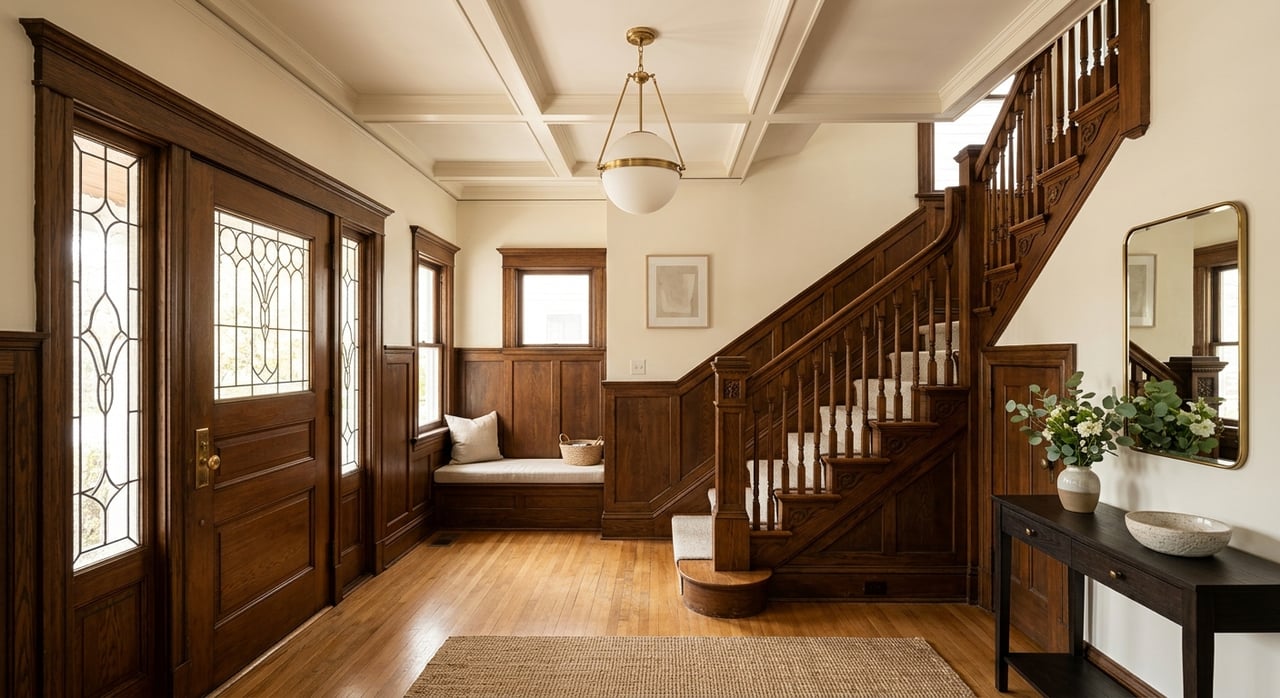
The National Park Service describes preservation as retaining a building’s existing form, features, and materials. It also notes that distinctive materials, features, finishes, and craftsmanship should be preserved, while careful upgrades to mechanical, electrical, and plumbing systems can still be appropriate.
That balance is especially important in older Bronxville homes. You do not have to freeze a house in time to make smart decisions, but you do want to avoid replacing defining features just because they are old.
Plaster often deserves repair
Historic plaster was used in nearly all buildings until the 1930s or 1940s, according to the National Park Service. Its guidance recommends retaining historic plaster where possible because it is part of the building’s fabric.
In practical terms, that means patching and repair may make more sense than a full tear-out. If the plaster can be stabilized and restored, that approach may preserve both character and finish quality.
Windows should be evaluated carefully
The National Park Service says energy performance, code requirements, or hazardous materials alone are not reasons to replace historic windows. Repair should be the first option, and if replacement is truly necessary, the new material should match the old in composition, design, color, and texture.
For Bronxville owners, that means window decisions should be made case by case. Original windows may still contribute meaningfully to the look and feel of the home, and buyers often notice when replacements feel out of step with the architecture.
Masonry work needs the right method
Older masonry can be damaged by well-intended but improper repair. The National Park Service warns that repointing should match the historic mortar’s strength, permeability, color, texture, and composition rather than use mortar that is too hard or visually incompatible.
If you are planning brick, stone, or chimney work, this is one area where the right contractor questions matter. A mismatched repair can affect both appearance and long-term performance.
Handle hazards and systems before cosmetics
If I were helping you think through priorities, I would put safety, moisture, and core systems ahead of decorative finishes. That sequence is usually the most efficient path in an older home.
A sound framework is to:
- Document the existing home
- Address roof, water intrusion, structural issues, and known hazards
- Update systems and improve efficiency
- Finish cosmetic work last
This order aligns well with preservation guidance and Bronxville’s permit framework. It also helps you avoid the frustration of redoing new finishes after opening walls or correcting hidden issues.
Plan energy upgrades with a light touch
If energy efficiency is part of your goal, older homes usually benefit from a measured strategy rather than a gut renovation approach. The National Park Service recommends starting with an energy audit, then targeted air sealing, window and door repair or upgrades, efficient HVAC and electrical systems, and insulation only where appropriate.
That is a useful reminder that better performance does not always require replacing every historic element. In many homes, careful weatherization and system improvements can produce meaningful gains while preserving the design and materials that make the home feel like Bronxville.
Ask the right questions before work begins
The quality of your planning often comes down to the questions you ask early. In older homes, that means looking beyond finishes and asking about compliance, hazards, and repair options.
Here are a few smart questions to put on your list:
- Is this pre-1978 work being handled by a lead-safe certified firm?
- Do we need asbestos sampling before opening walls or removing tile, ceiling materials, or old pipe wrap?
- Which village permits are required?
- If this is a co-op or condo, what board approvals are needed?
- Can the original windows, plaster, or masonry be repaired instead of replaced?
- If replacement is necessary, what exact match is proposed?
These questions can help you compare contractors more effectively and reduce surprises later.
Keep disclosure in mind if resale is ahead
Even if you are renovating for your own use, it is smart to think ahead about future resale. New York’s current Property Condition Disclosure Statement must be delivered to the buyer before the buyer signs a binding contract of sale. The form asks sellers about asbestos, lead plumbing, radon testing, roof condition, structural defects, plumbing, heating and cooling, flooding, water intrusion, and other major systems.
The form also states that it is not a warranty and not a substitute for inspections or environmental testing. For you as an owner, the practical value is this: careful records, permit documentation, and a clear understanding of what was repaired, replaced, or tested can make a future sale smoother.
Lead and asbestos should also be addressed thoughtfully in older homes. EPA states that buyers and renters of most housing built before 1978 have the right to know whether lead-based paint hazards are present before signing, and renovation work that disturbs painted surfaces in pre-1978 housing must follow lead-safe rules through certified firms and renovators. For asbestos, both EPA guidance and New York homeowner guidance support professional sampling when suspect materials may be disturbed, since you cannot confirm asbestos just by looking.
A calm, phased approach usually wins
The biggest renovation mistake I see in older homes is moving too quickly into finish decisions before the real constraints are understood. In Bronxville, the combination of architectural character, local approvals, co-op and condo requirements, and older-building conditions rewards patience upfront.
A calm, phased plan tends to protect both your budget and your options. It gives you room to preserve what matters, improve what buyers care about, and avoid spending money in ways that do not add value.
If you are weighing updates before a sale, buying an older home with renovation questions, or trying to decide what work is worth doing first, I can help you think it through with a practical, legally informed lens. To start the conversation, schedule a consultation with Susan Hawkins, Esq..
FAQs
What updates matter most for resale in an older Bronxville home?
- Paint, roof work, kitchen improvements, bathroom updates, and a stronger front entry tend to be the most buyer-facing improvements supported by the research.
Do interior renovations in a Bronxville single-family home require site plan approval?
- Bronxville’s code says interior-only alterations that do not change use do not require site plan approval, but new construction and material alterations do.
Why should Bronxville homeowners check older permits before renovating?
- Prior permits, building files, and older plans can clarify what work was previously done and help you define scope before making design and budget decisions.
Should you replace original windows in an older Bronxville house?
- Not automatically. National Park Service guidance says repair should be the first option, and if replacement is necessary, the new windows should closely match the old ones.
What should co-op or condo owners in Bronxville expect before starting renovations?
- Bronxville’s permit application requires architectural drawings, a board-approval letter, and an asbestos report, so owners should plan for board review and testing from the start.
What hazards should be checked in an older Bronxville home before renovation?
- Lead-based paint and asbestos are two major concerns to review early, especially if work will disturb painted surfaces, tile, ceiling materials, or old pipe wrap.