If you have come across a home listed as Bronxville P.O./Yonkers, you may be wondering what that actually means. It is a common point of confusion, especially if you are trying to compare location, commute, housing style, and day-to-day convenience. The good news is that this area has a clear identity once you understand how postal boundaries, neighborhood character, and access all fit together. Let’s dive in.
What Bronxville P.O./Yonkers Means
Bronxville P.O./Yonkers is not a separate village or municipality. Instead, it is a practical way to describe the Yonkers portion of the 10708 postal area, which also includes the Village of Bronxville and parts of Eastchester.
In other words, some homes have a Bronxville mailing identity while remaining within the City of Yonkers. That distinction matters when you are evaluating a property, because postal naming and municipal boundaries are not always the same thing in this part of Westchester.
Westchester County planning materials make this especially clear. They identify 10708 as covering Bronxville, western Yonkers, and parts of Eastchester, including Yonkers enclaves such as Lawrence Park West and Cedar Knolls.
Where the Area Sits
Geographically, this area sits just west of Bronxville village. The Bronx River Parkway forms Bronxville’s western edge and serves as a physical divider between the village and Yonkers.
That location gives Bronxville P.O./Yonkers a distinct advantage. You are close to the walkable center of Bronxville, yet still within Yonkers city limits in many cases, depending on the address.
For buyers, that often means you need to look carefully at more than just the mailing address. If I were advising you, I would suggest confirming the exact municipality, property type, and surrounding neighborhood context early in your search so you can compare homes accurately.
Housing Character in Bronxville P.O./Yonkers
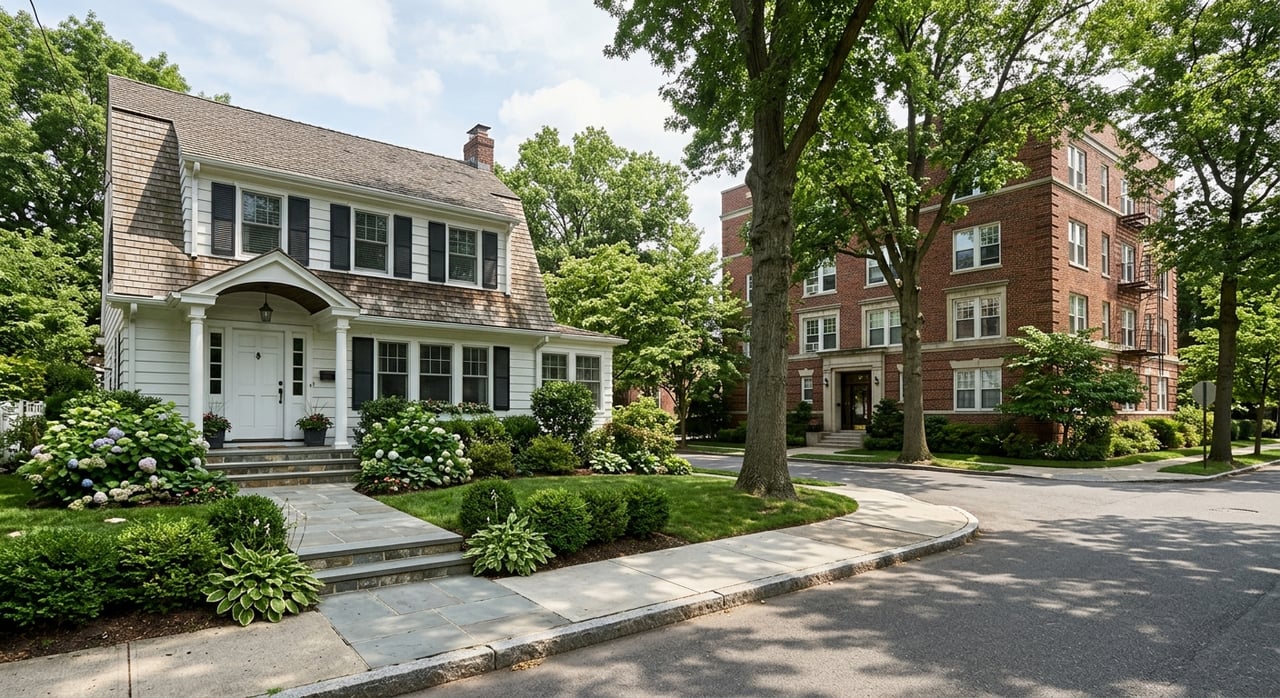
One of the biggest draws here is the housing stock. This pocket of Yonkers is known for older, character-rich homes rather than a more typical postwar suburban layout.
Across the broader 10708 area, you will see a mix of Tudor, Colonial, and Victorian architecture, along with some townhouses and apartments closer to Bronxville village. That gives the area a more established, low-rise feel with a strong sense of architectural continuity.
For buyers who appreciate period details, mature landscaping, and homes with individuality, that can be a major plus. For sellers, it also means presentation matters, because buyers often respond strongly to craftsmanship, layout, and how well updates fit the home’s original style.
Lawrence Park West
Lawrence Park West is one of the most recognized neighborhoods on the Yonkers side of 10708. Developed beginning in 1909, it includes about 300 homes and is known for mature trees, larger lots, and a concentration of Tudor, Victorian, and Colonial houses.
It also benefits from close proximity to the Bronxville train station and downtown. That helps explain why this neighborhood often feels tied to both Yonkers and Bronxville in everyday life.
Cedar Knolls
Cedar Knolls is another key enclave within the Bronxville P.O./Yonkers area. Yonkers historic records describe it as a district of private single-family homes built between 1913 and 1945.
Architecturally, the neighborhood includes a strong mix of Colonial Revival and Tudor Revival homes, along with French Norman, Italian Renaissance, and Mediterranean Colonial Revival examples. Yonkers also identifies Cedar Knolls Pondfield Road West among the city’s protected historic resources.
Armour Villa
Armour Villa is another long-established Yonkers neighborhood within the same postal area. It sits just west of the Bronx River Parkway and directly over the Bronxville line.
Yonkers planning documents group Armour Villa with Cedar Knolls, Park Hill, and Lawrence Park West as historic planned developments that shaped the city’s residential identity. If you are looking for a neighborhood with long-standing roots and established housing patterns, Armour Villa is part of that conversation.
Commuting From Bronxville P.O./Yonkers
For many buyers, commute access is one of the area’s biggest advantages. The Bronxville Metro-North station on the Harlem Line is the main transit anchor.
Under normal conditions, neighborhood sources describe the ride to Midtown and Grand Central as roughly 29 to 30 minutes. The station also includes ticket machines and connections to the Bee-Line bus system.
That means you are not relying on just one mode of transportation. In my experience, that kind of flexibility can make a real difference in day-to-day planning, especially if you are balancing train schedules, driving, or local errands.
Local Bus and Road Options
Westchester Bee-Line service adds another useful layer of mobility. Route 26 connects Bronx, Yonkers, and Bronxville, while Route 30 connects Yonkers, Bronxville, and New Rochelle.
For drivers, the broader road network is also part of the appeal. Access via the Saw Mill River Parkway, Cross County Parkway, and the nearby Bronx River Parkway helps support local and regional travel.
Everyday Convenience and Amenities
A big part of this area’s appeal is how easily residential streets connect to daily needs. Bronxville village is the closest convenience hub for many residents in the Yonkers portion of 10708.
The village business district includes groceries, pharmacies, restaurants, banks, medical offices, and a movie theater. The Bronxville Public Library is also centrally located, about a ten-minute walk from the station along Pondfield Road through the main business district.
On the Yonkers side, larger retail destinations expand your options. The city identifies Cross County Shopping Center, Ridge Hill, and the Central Park Avenue corridor as major shopping anchors.
That blend can be especially useful if you want a neighborhood that feels residential but still keeps errands manageable. You have access to a walkable village center as well as larger shopping destinations nearby.
Parks and Outdoor Space
Bronxville P.O./Yonkers also benefits from excellent access to outdoor space. The Bronx River greenway network is the area’s most notable recreational asset.
Westchester County describes the Bronx River Pathway as an 11.2-mile paved multi-use trail that runs alongside the Bronx River Parkway. It supports walking, biking, and running, which adds an everyday lifestyle benefit for nearby residents.
Scout Field is another important local asset. Located within Bronxville, Mount Vernon, and Yonkers, it spans 22.9 acres and offers space for walking, biking, running, picnicking, nature study, and ball fields, with direct pathway access.
If you want even more destination-style green space, Untermyer Park and Gardens is also nearby in Yonkers. The city describes it as a 43-acre historic park with formal gardens, fountains, and Hudson River views.
Why Buyers Often Notice This Area
Buyers are often drawn to Bronxville P.O./Yonkers because it combines several features that can be hard to find in one place. You get distinctive older homes, strong commuter access, a walkable village center nearby, and convenient connections to larger retail and park systems.
At the same time, this is not a one-size-fits-all location. Housing styles vary, municipal lines matter, and older homes may come with maintenance or update considerations that deserve a careful look.
That is where a detailed, property-specific approach really helps. If you are comparing homes here, I would pay close attention to the address details, transit access, architectural condition, and how each block fits your everyday routine.
What Sellers Should Keep in Mind
If you are selling in Bronxville P.O./Yonkers, neighborhood context is a major part of your marketing story. Buyers often respond to the area’s architecture, proximity to Bronxville village, access to Metro-North, and the appeal of established residential enclaves.
That means your home should be positioned with care. Clear communication about location, housing style, updates, and convenience can help buyers understand the value of the property beyond the mailing label alone.
For older homes in particular, details matter. Thoughtful preparation, realistic pricing, and a strong explanation of character features can go a long way in helping buyers appreciate what makes the property special.
If you are considering a move in Bronxville P.O./Yonkers, working with a detail-oriented local advisor can help you sort through the nuances with more confidence. To talk through your next step, connect with Susan Hawkins, Esq..
FAQs
What is Bronxville P.O./Yonkers in Westchester County?
- It is the Yonkers portion of the 10708 postal area next to Bronxville village, rather than a separate municipality.
What types of homes are common in Bronxville P.O./Yonkers?
- The area is known for older homes, especially Tudors, Colonials, Victorians, and other period-style houses, with some townhouses and apartments closer to Bronxville village.
What neighborhoods are part of Bronxville P.O./Yonkers?
- Commonly referenced Yonkers neighborhoods in the 10708 area include Lawrence Park West, Cedar Knolls, and Armour Villa.
How do you commute from Bronxville P.O./Yonkers to Manhattan?
- Many residents use the Bronxville Metro-North station on the Harlem Line, with a typical trip to Midtown or Grand Central of about 29 to 30 minutes under normal conditions.
What shopping and errands are convenient from Bronxville P.O./Yonkers?
- Residents often use Bronxville village for daily errands and also have access to larger Yonkers retail destinations such as Cross County Shopping Center, Ridge Hill, and Central Park Avenue.
What parks are near Bronxville P.O./Yonkers?
- Nearby outdoor options include the Bronx River Pathway, Scout Field, and Untermyer Park and Gardens in Yonkers.