If you are buying in Bronxville, architecture is not just a style preference. It shapes how a home looks, how it lives, what it may need over time, and even how you compare one property to another. In a village where much of the housing stock predates World War II, understanding architectural character can help you make a more confident decision. Let’s dive in.
Why Bronxville Architecture Matters
Bronxville has a distinct built character because it developed early and within a very compact footprint. The village describes itself as an English-style community about 15 miles north of Midtown Manhattan, and its housing mix includes apartments, townhouses, and single-family homes.
That older fabric is a major part of the story. According to the village’s 2020 Comprehensive Plan, 72% of housing units were built before 1939. For you as a buyer, that means architectural style is often tied directly to layout, materials, maintenance needs, and renovation history.
How Bronxville Took Shape
Bronxville’s modern residential identity began in the 1890s after William Van Duzer Lawrence purchased Prescott Farm and helped shape the area as a planned model suburb. The village history describes homes and streets fitted to the terrain rather than forced into a rigid grid.
That planning approach still shows today. In many parts of Bronxville, the topography, setbacks, street pattern, and house placement are part of the architectural experience, not just the backdrop.
Lawrence Park’s Lasting Influence
Lawrence Park is one of the clearest examples of this early planning. It is known for narrow, meandering streets, irregular building plots, and homes that appear to rise from the granite bedrock.
The National Register district identifies Colonial Revival, Classical Revival, and Tudor Revival as key styles there. If you are touring homes in this area, you are not just evaluating one property at a time. You are also seeing how house, lot, and landscape work together.
The Main Bronxville Home Styles
Bronxville offers more than one architectural language, but a few styles stand out again and again. Knowing the basics can help you look past surface charm and focus on what matters.
Tudor Homes
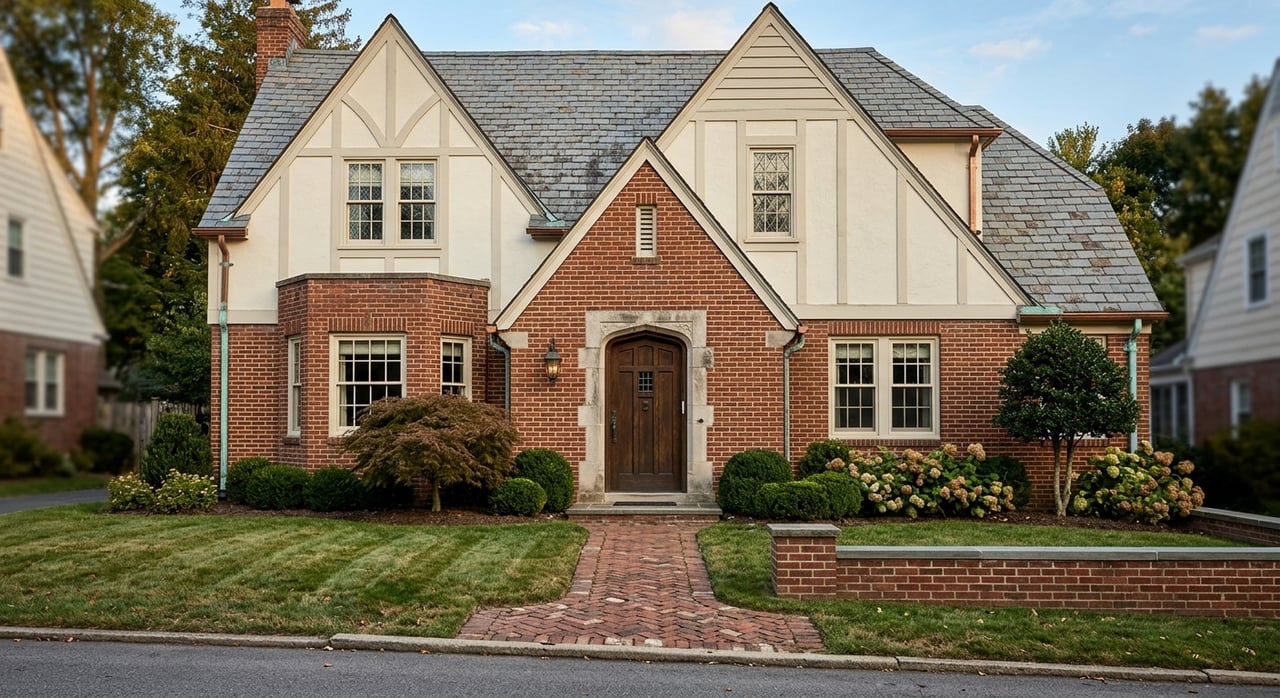
Tudor homes are often the easiest to recognize in Bronxville. Common features include steep slate roofs, stone or brick walls, timbering, leaded glass, asymmetrical forms, and clustered chimneys.
Lewis Bowman had a major influence on this look, especially in Masterton Wood, where the village highlights a concentration of his “stockbroker Tudor” designs. These homes often make a strong first impression, but they also deserve a careful look at roofing, masonry, chimneys, and older windows.
Colonial and Colonial Revival Homes
Colonial and Colonial Revival homes tend to feel more formal and balanced. Typical features include symmetrical facades, side-gabled or hipped roofs, columns or pilasters, and details such as fanlights or Palladian windows.
In Bronxville, these homes often read as classic and orderly. The simpler exterior forms can make updates feel more straightforward, but as with any older house, the real question is how well the home has been maintained and whether changes respected the original character.
Victorian Homes
Victorian-era homes bring a more decorative and eclectic feel. Features may include asymmetrical forms, intersecting gables, turrets, patterned shingles, wrap-around porches, and multi-paned or stained-glass windows.
Bronxville’s village history connects this style to the late 19th century, when estate land was divided into smaller parcels. For buyers, the appeal is often in the detail and individuality, while the practical tradeoff can be more upkeep for trim, porches, and ornament.
Pre-War Apartments and Townhouses
Bronxville architecture is not limited to detached homes. Pre-war apartment buildings and early townhouses are also part of the village’s visual identity and housing mix.
The village history notes that buildings such as Gramatan Court and Alger Court were designed by William Bates to echo the scale and architectural interest of nearby single-family homes. Kensington Terrace was conceived as a way to enjoy suburban living without the full responsibilities of home ownership, which still resonates with many buyers today.
What Architecture Means for Daily Living
A beautiful facade matters, but daily life matters more. In Bronxville, older architecture often goes hand in hand with walkability, compact scale, and easy access to the business district and train station.
The village says most neighborhoods are within walking distance of the downtown area, and it notes a 28-minute train ride to Grand Central. If you want a home that feels connected to the street and village core, architecture and location often work together here.
Layout and Flow
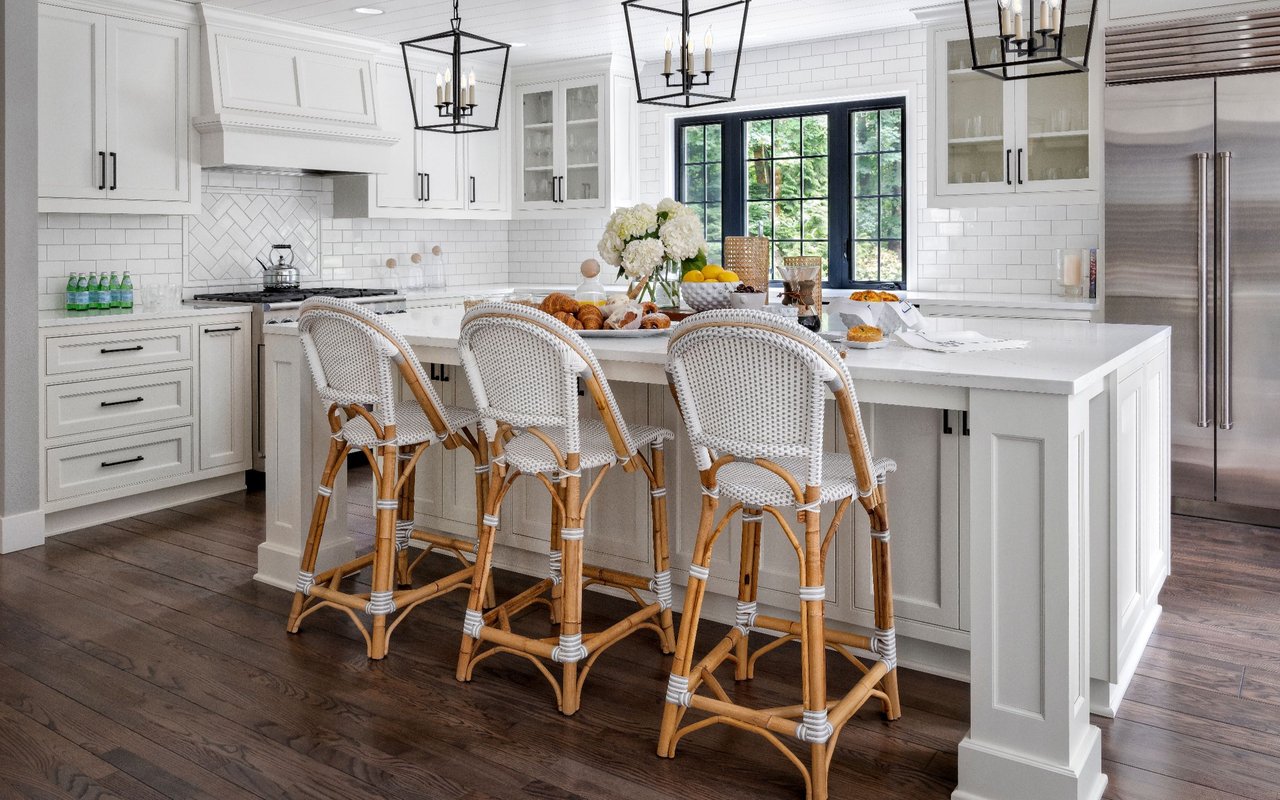
Older homes can offer wonderful detail and craftsmanship, but room flow may differ from what you see in newer construction. You may find more defined rooms, smaller secondary spaces, or additions completed in different eras.
That is not necessarily a drawback. It simply means you should evaluate how the home supports your day-to-day routine rather than assuming charm alone will carry the decision.
Shared Maintenance in Multifamily Homes
If you are considering a co-op, condo, or apartment-style property, the architectural appeal may come with a different ownership experience. You can still enjoy pre-war character, but with less direct responsibility for exterior upkeep than you would have in a single-family home.
That can be especially appealing if you love Bronxville’s older architecture but want a more simplified lifestyle. It is one reason the village’s mix of housing types is so useful for different stages of life.
What Buyers Should Inspect Closely
In a village with a large share of older housing, style is only the starting point. The more important questions often involve condition, repair history, and the quality of prior updates.
The broad maintenance themes across Bronxville’s older homes are usually roofs, windows, masonry, and moisture management. Those issues can affect comfort, cost, and long-term planning.
Key Systems and Surfaces to Review
When you tour a Bronxville home, pay close attention to:
- Roof age and material condition
- Chimneys and visible masonry wear
- Window condition and whether original windows were repaired or replaced
- Signs of water intrusion or moisture issues
- Exterior materials that may require specialized upkeep
- Evidence that renovations fit the home’s original structure and style
A well-kept older home can be a wonderful fit. The key is understanding what has already been addressed and what may still be ahead.
Why Repair History Matters
Preservation guidance cited in the research report notes that regular maintenance is often more cost-effective than replacement. It also notes that older buildings may have energy-conscious features already, such as operable windows and heavy masonry walls.
For you, that means the best question is not simply “Has this been updated?” A better question is “What was updated, how was it done, and does it work with the house?”
Renovation and Permit Considerations
If you are thinking about making changes after closing, it helps to understand the local process early. Bronxville’s Building Department enforces state codes and local laws, issues permits, and regulates construction, demolition, alteration, and repair work.
The village says normal review lead time is about three weeks, and certain work is limited to weekday hours. That may affect your timeline if you are planning renovations soon after purchase.
Design Review in Bronxville
Bronxville also has a Design Review Committee that works to maintain overall visual consistency. It reviews signs, awnings, and other development applications.
For a buyer, the practical takeaway is simple. If you are purchasing an older or architecturally distinctive property, ask early about prior permits, proposed changes, and any local review that may apply.
Where to Look for Bronxville Architecture
If you are just starting your search, a few areas can help you understand Bronxville’s architectural range.
Lawrence Park
Lawrence Park shows the village’s early hillside planning and some of its most recognizable historic character. Irregular lots, winding streets, and architect-designed homes make it one of the most visually distinctive parts of Bronxville.
Masterton Wood
Masterton Wood is especially useful if you are drawn to Tudor architecture. It is the best-known concentration of Lewis Bowman’s Tudor designs in the village.
Pondfield Road Corridor
The Pondfield Road corridor includes older landmark homes such as the Abijah Morgan House and Crownlands. It is a helpful area for seeing layers of Bronxville’s residential history.
Central Village and Early Multifamily Areas
The central village and early multifamily corridors highlight how Bronxville adapted suburban living to apartment and townhouse forms. Buildings such as Gramatan Court, Alger Court, Pondfield Court, and Kensington Terrace help tell that story.
How Architecture Can Affect Resale
In Bronxville, architecture is part of the market identity. The village itself highlights Tudor, Colonial, and Victorian homes, along with its mix of apartments, townhouses, and single-family properties.
That does not mean one style is always better than another. It does suggest that buyers often respond well to homes that retain defining details and show thoughtful maintenance over time.
If I were advising you, I would focus on the combination of character and condition. A home that presents clearly, functions well, and respects its original design often aligns well with what Bronxville buyers expect.
A Smart Buyer’s Approach
When you buy in Bronxville, it helps to balance emotion with diligence. You may fall in love with a slate roof, a leaded-glass window, or a gracious Colonial facade, but the smartest purchase usually comes from pairing that emotional connection with careful review.
A strong approach includes:
- Identifying which architectural styles truly fit your taste and lifestyle
- Comparing maintenance demands across houses, townhouses, and multifamily options
- Reviewing renovation history and permit records where relevant
- Looking closely at roofs, windows, masonry, and moisture issues
- Considering how walkability and location support your daily routine
Bronxville’s architecture is a big part of what makes the village special. If you understand what you are seeing, you can buy with more clarity and far less guesswork.
If you are considering a purchase in Bronxville and want practical guidance on evaluating character, condition, and next steps, Susan Hawkins, Esq. can help you navigate the process with care and precision.
FAQs
What architectural styles are common in Bronxville homes?
- Bronxville is especially known for Tudor, Colonial Revival, Classical Revival, Victorian-era homes, and pre-war apartments and townhouses.
What should buyers inspect in older Bronxville houses?
- Buyers should look closely at roofs, chimneys, masonry, windows, moisture management, and the quality of past repairs or renovations.
What makes Lawrence Park important in Bronxville architecture?
- Lawrence Park reflects Bronxville’s early planned suburban development, with winding streets, irregular lots, hillside siting, and a strong mix of historic revival styles.
Are Bronxville apartments part of the village’s architectural character?
- Yes. Early apartment buildings and townhouses were designed to relate visually to surrounding homes and are an important part of Bronxville’s architectural story.
Do Bronxville renovations usually require permits?
- Bronxville’s Building Department issues permits and enforces local laws and state codes, so buyers planning alterations or repairs should verify what approvals may be required.
Why does architecture matter for Bronxville resale value?
- Architecture matters because it is central to Bronxville’s identity, and homes that retain key character details and show sound maintenance often align well with buyer expectations.